People
Tribal Knowledge in Manufacturing: Fix the Process First

Anthony Occidentale and Alex LaDouceur
· 4 min read
When a process stops because one person is out, it was designed around that person's memory. Writing down what they know helps, and it belongs at the end of the fix. The lasting fix is reshaping the work so someone new can do it correctly in their first week.
A weekly report stops when one planner takes a week off
Key-person dependency is the risk that a critical step slows or stops when one person is absent. To find one, list every shop-floor step that waits when a named person is out for a week.
Picture the weekly production report at a mid-size plant. One planner built it in a spreadsheet eight years ago. It pulls three exports, runs two macros nobody else has opened, and needs a manual fix each time a new part number appears. The planner takes a week off, and the Monday meeting runs without numbers.
Nothing broke that week. The process was built to need one person, and it did.
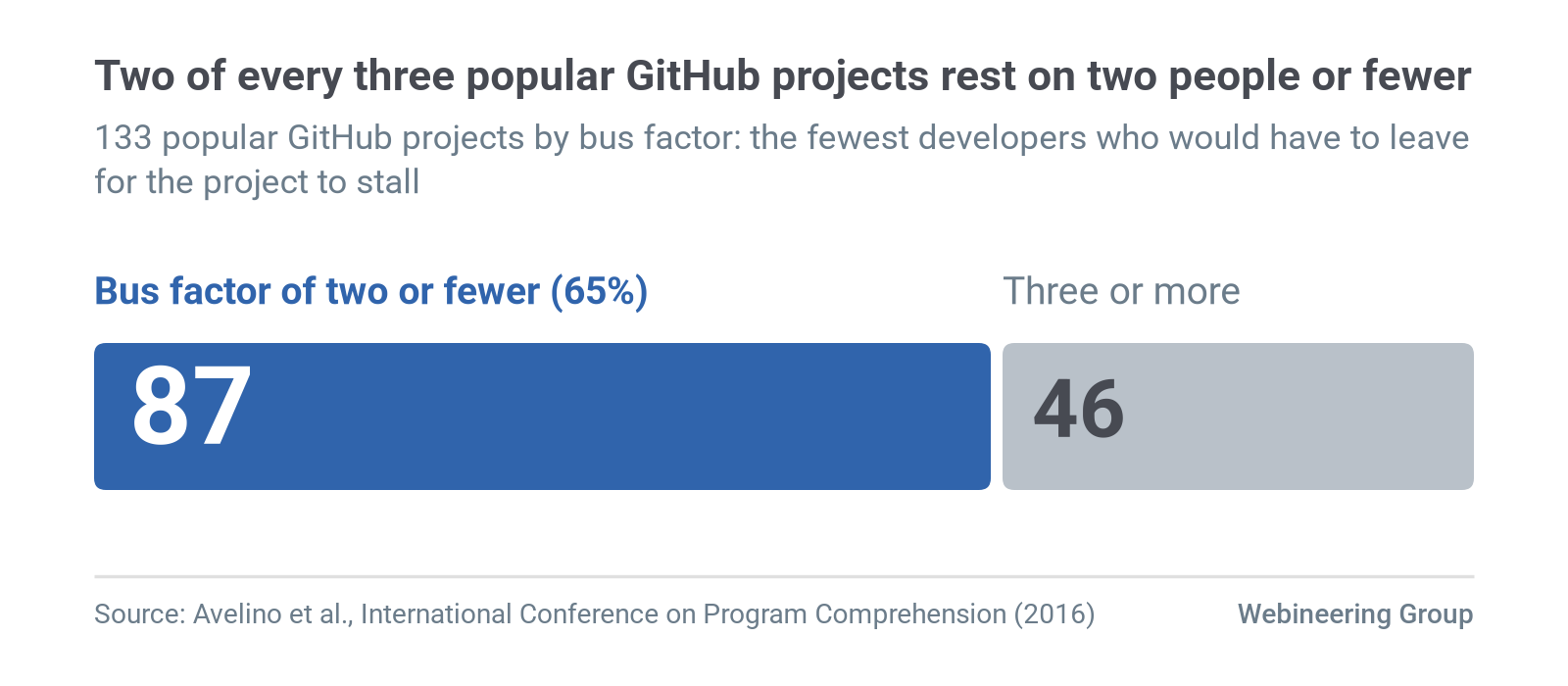
Software engineers measure this risk and call it the bus factor: the number of people who'd have to leave before a project stalls. Guilherme Avelino and colleagues estimated it for 133 popular GitHub projects and found that 87 of them, or 65%, had a value of two or fewer (International Conference on Program Comprehension, 2016). Those are public, heavily used projects with every change on record. A plant's recurring reports, changeovers and workarounds are unlikely to do better.
Documentation captures part of what experts know
The standard response is a documentation push: interview the expert, write the standard operating procedure (SOP), save it to a shared drive. That captures the explicit steps. Two gaps remain.
The first is tacit knowledge. Philosopher Michael Polanyi wrote in 1966 that "we can know more than we can tell." An experienced operator hears a bearing before it fails, feels when a torque is right, and knows which supplier's lots run wet.
Ikujiro Nonaka and Hirotaka Takeuchi documented how that kind of knowledge moves in their 1995 book The Knowledge-Creating Company. Ikuko Tanaka, a Matsushita software developer, apprenticed herself to the head baker of the Osaka International Hotel to learn how he kneaded dough. She described his motion as a "twisting stretch," and after a year of trial and error, Matsushita's engineers turned that phrase into special ribs inside the dough case of a home bread maker.
The second gap is that people bypass documents. A study of the normal job performance of aircraft maintenance engineers at four European organisations found that "34 per cent acknowledged that their most recent task had been performed in a manner that contravened the formal procedures." Nicholas McDonald and colleagues published the study in Safety Science in 2000, and Alan Hobbs summarized it for the Australian Transport Safety Bureau (ATSB) in 2008. Airbus's 2010 maintenance briefing notes, citing the same research, report that technicians "said that there are easier and quicker ways than the official method."
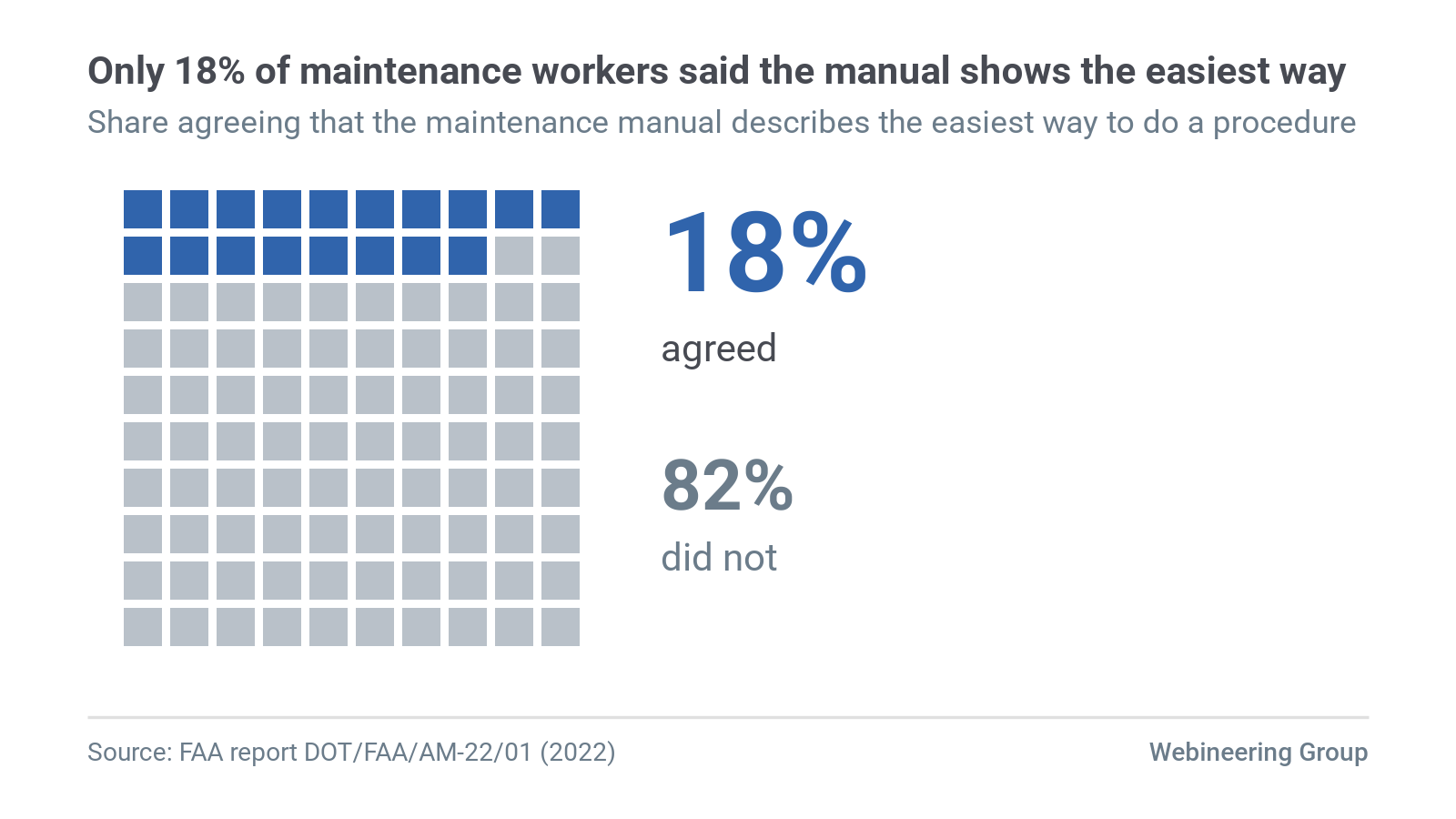
In a 2022 Federal Aviation Administration (FAA) review, only 18% of maintenance workers agreed the manual described the easiest way to do a procedure. The same report found that failure to follow procedures contributes to "between 40.5% and 87% of all maintenance-related events." Aircraft maintenance is one of the most procedure-driven jobs in industry, and a plant SOP on a shared drive faces the same pressures with less oversight.
Workforce numbers raise the stakes. Deloitte and The Manufacturing Institute project that U.S. manufacturing could need as many as 3.8 million workers between 2024 and 2033, and warn that without significant changes "more than 5 in 10 or 1.9 million of these jobs could go unfilled." Every new hire inherits whatever lives only in someone's head.
Fix the work in this order
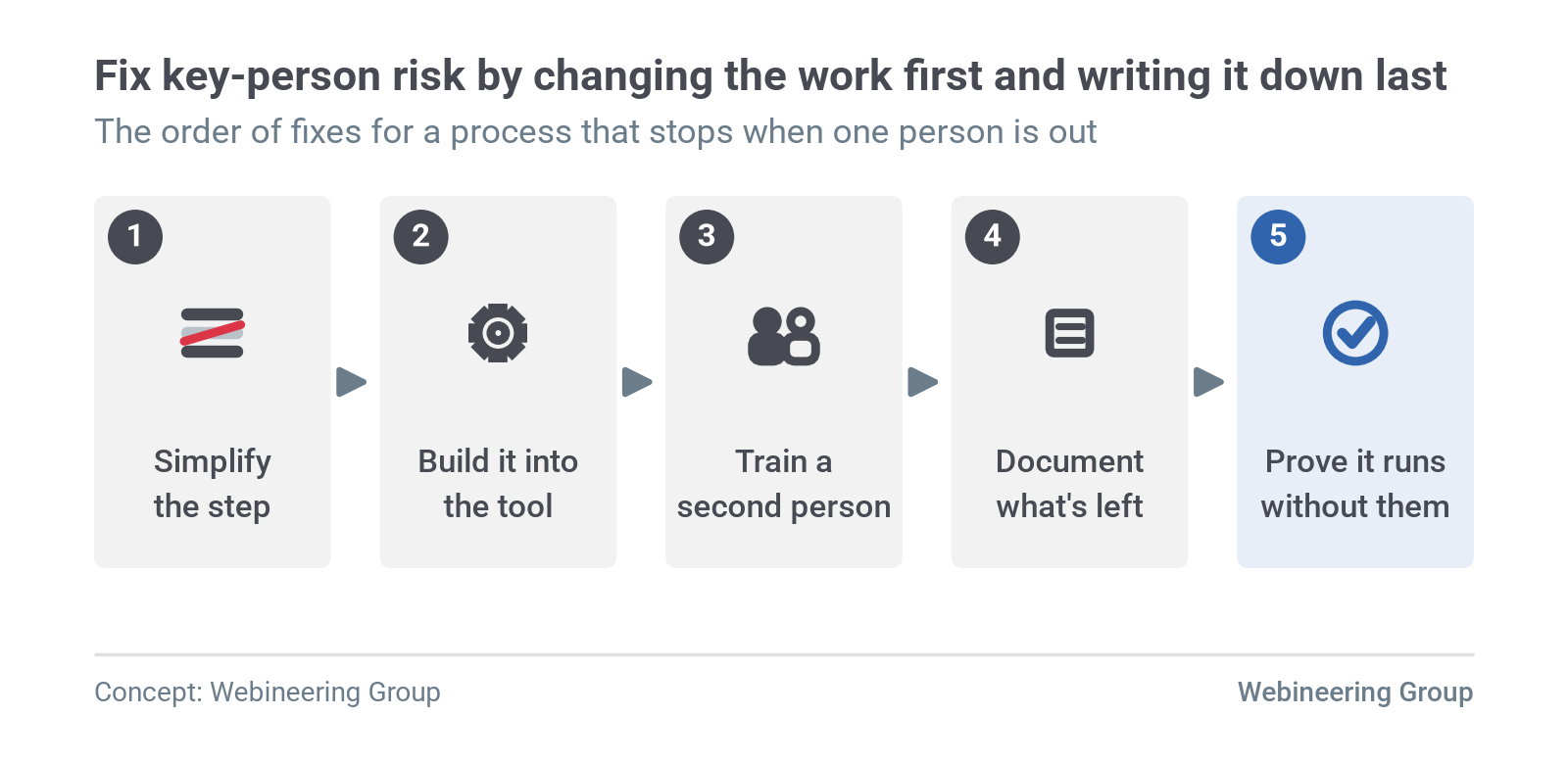
- Simplify the step. Remove the decision where you can. A spreadsheet that needs a manual fix for each new part number needs a lookup table. A changeover that depends on feel needs a measured setting.
- Build the knowledge into the tool. Fixtures, go/no-go gauges, preset torque drivers, marked locations and error-proofing devices carry knowledge with nothing to read. Lean practitioners call error-proofing poka-yoke, and the Matsushita bread maker is the same idea at product scale.
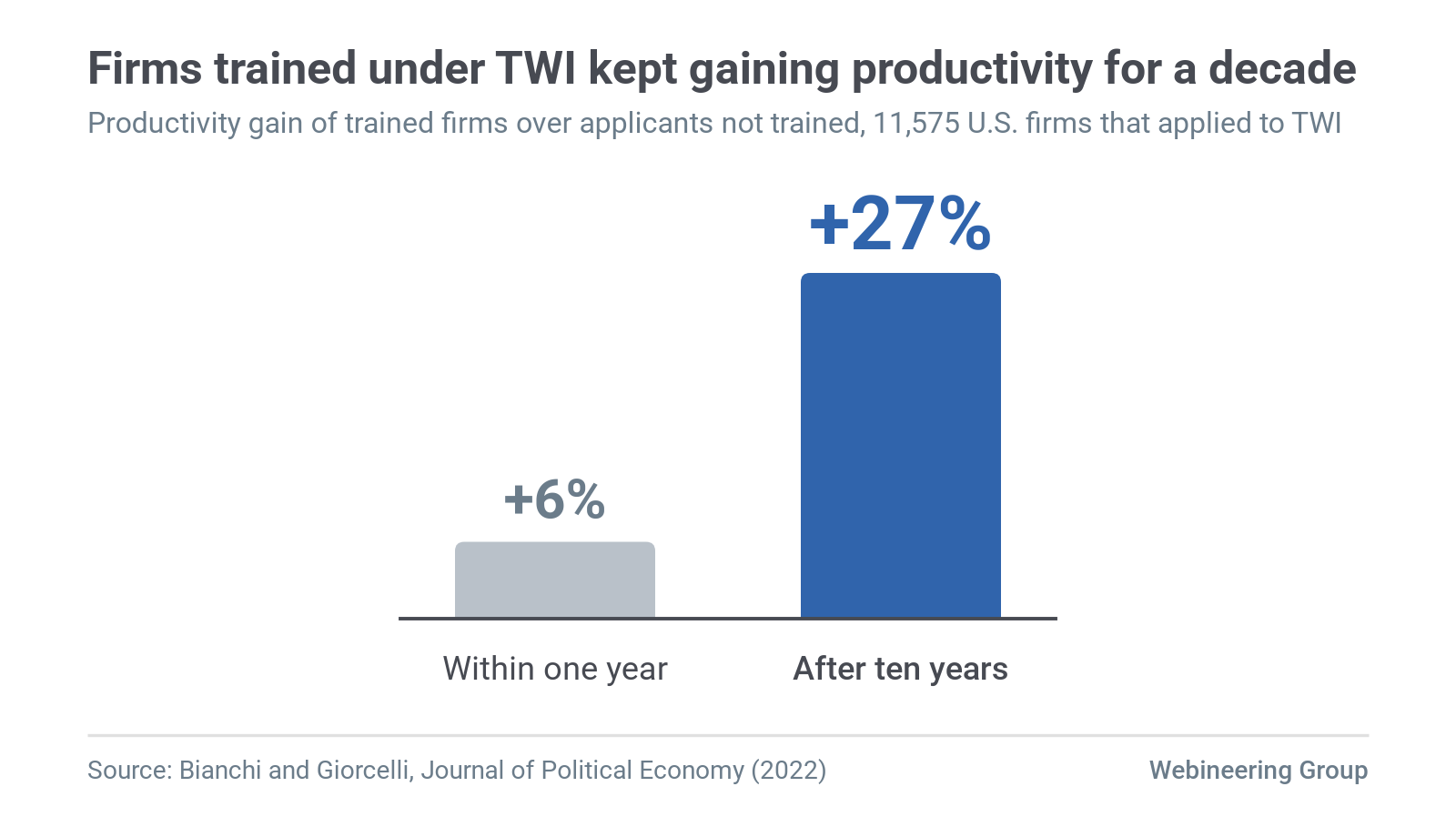
- Train a second person by doing. Training Within Industry (TWI) Job Instruction, a U.S. wartime program, breaks a job into important steps, key points and the reason for each key point, then has the trainee do the job and explain it back. Economists Nicola Bianchi and Michela Giorcelli tracked all 11,575 U.S. firms that applied to TWI. Productivity rose 6% within a year of training and 27% after ten years (Journal of Political Economy, 2022).
- Document what's left. By now the document is short: the remaining judgment calls, the key points and the reasons behind them. Post it where the work happens.
- Prove it. The fix is done when the second person runs the process alone, with the expert away, and the output passes.
Three conditions change the order
- Long-apprenticeship skills. Hand scraping, complex welding and batch recipe adjustment take years of practice. Redesign shortens the path, so plan overlap time before any retirement.
- Regulated procedures. Where a regulator or customer controls the procedure, changes need formal approval, so simplification runs through your change control process.
- Rare specialist tasks. A job done once a year by an outside specialist may need only a checklist and a recorded walkthrough.
Monday: run a 15-minute bus-factor test
- List every recurring report, changeover, adjustment and approval your area depends on.
- Write next to each one the names of everyone who can do it alone today.
- Circle every item with one name.
- Pick the circled item that would hurt most if it stopped next week.
- Pair a second person with the expert on that item for its next three runs, with the second person doing the work.
Map your single points of failure
Our fixed-fee site assessment maps the recurring work across a site and who can run each piece. It also ranks which processes to redesign first. To start on your own, the free bus-factor audit lists your recurring reports and processes, flags the ones that depend on a single person, and returns a risk list.
Site assessment
Want to see where your own line stands?
An evidence-backed report on where real value lies, from the people who stay through implementation.
About the authors
Alex LaDouceur
Founder
Alex has led Webineering since it started in 2022. At DuPont's Circleville plant he held senior engineering and engineering management roles on the $250 million Kapton and Pyralux expansion, a continuous web line taken from design to qualified production. At Schlumberger he was responsible for assembly, test and refurbishment across deepwater completions product lines.